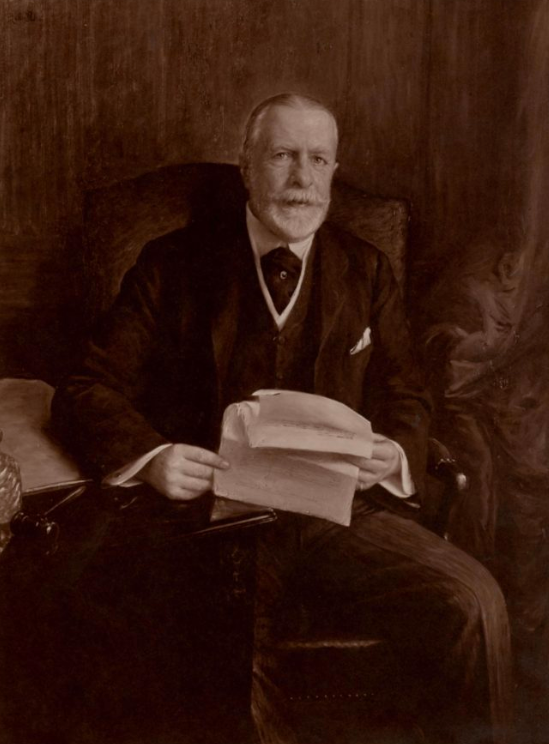
 George Lockhart Rives (May 1, 1849 – August 18, 1917) was a prominent American lawyer, diplomat, historian, and civic administrator who played a pivotal role in the
modernization of New York City’s infrastructure and cultural institutions.
George Lockhart Rives (May 1, 1849 – August 18, 1917) was a prominent American lawyer, diplomat, historian, and civic administrator who played a pivotal role in the
modernization of New York City’s infrastructure and cultural institutions.Queer Places:
Columbia University (Ivy League), 116th St and Broadway, New York, NY 10027
University of Cambridge, 4 Mill Ln, Cambridge CB2 1RZ
Island Cemetery, 30 Warner Street, Newport, Rhode Island 02840 United States
George Lockhart Rives (May 1, 1849 – August 18, 1917) was a prominent American lawyer, diplomat, historian, and civic administrator who played a pivotal role in the
modernization of New York City’s infrastructure and cultural institutions.
Born into an influential New York family with deep diplomatic and political roots, Rives was the son of Francis Robert Rives and Matilda Antonia Barclay. He completed his undergraduate studies at Columbia College in 1868.
Following Columbia, Rives traveled to England to pursue further studies at Trinity College, Cambridge (1868–1872). During his tenure at Trinity he excelled academically, becoming a scholar in 1872 and winning the prestigious Harness Prize for an essay on Shakespearean literature. He earned his law degree from Cambridge, later returning to New York to graduate from Columbia Law School in 1873.
Upon admission to the New York Bar in 1876, Rives co-founded the legal partnership Olin & Rives. Throughout his career, he served in high-profile public positions: Assistant Secretary of State (1887–1889), appointed by President Grover Cleveland, Rives focused primarily on Latin American affairs; New York Rapid Transit Commission (1896–1902) where he served as a key planner in the legal and logistical development of the early New York City subway system; He headed the commission that revised the Greater New York Charter and subsequently served as Corporation Counsel for New York City; Rives served also as Chairman of the Board of Trustees at Columbia University (1903–1917) and co-founded The New York Public Library, serving as Trustee and President of the board.
During his undergraduate years at Trinity College, Cambridge, Rives was elected to the Cambridge Apostles.
Founded in 1820, the Apostles was an elite, secretive intellectual debating society. During the Victorian era, the Apostles provided a rare, private space where members engaged in frank, progressive discussions regarding Platonic love, homoeroticism, and sexual identity away from rigid mainstream Victorian moral codes.
While Rives himself lived a traditional public life—marrying twice (first to Caroline Morris Kean and later to Sarah Swan Whiting) and raising a family—his membership in the Apostles links him directly to early LGBTQ history:
The network of the Cambridge Apostles is heavily studied within queer history, bridging Victorian homoerotic discourse to early 20th-century LGBTQ movements, most notably through Apostles like Oscar Browning, Lowes Dickinson, Bertrand Russell, E.M. Forster, and Lytton Strachey.
Because the Apostles were instrumental in fostering counter-discourses against Victorian heteronormativity, Rives is documented in LGBTQ cultural archives (such as the GLBTQ Encyclopedia archive) as part of the society's historic intellectual membership.
References:
Support this project
This website is a passion project researched, developed, and funded entirely by me. If you find the content valuable and would like to help support the ongoing research and hosting costs, any contribution is deeply appreciated.
Thank you for keeping this independent resource alive!
My books on Amazon: Elisa Rolle's books